

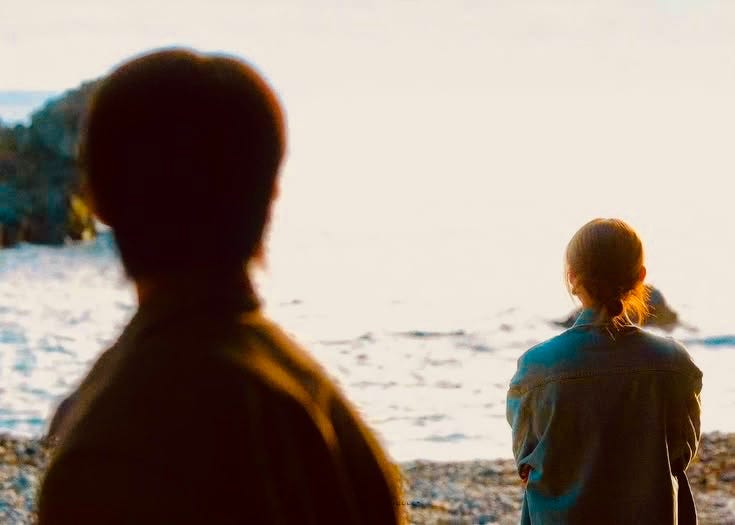
There is a particular kind of sadness in being unable to love someone who seems perfectly capable of being loved.
Not because they have done something wrong. Not because they lack the qualities one usually searches for in another person. Sometimes, they are kind, interesting, emotionally available, and everything makes sense on paper. There is no obvious reason to keep the door closed, yet something inside refuses to open it.
And that is where things become complicated.
We tend to believe that attraction is something we can explain. We have preferences, standards, and an idea of the kind of person who would fit into our lives. So when someone appears to meet those expectations, we assume our feelings should follow. But the heart does not seem particularly interested in our reasoning.
Someone can be right for us without feeling right to us. And sometimes, we cannot tell the difference between the two until we are standing in front of someone we cannot bring ourselves to let in.
Perhaps the strangest part is that the person may never get the chance to disappoint us. We reject them before anything has happened, before intimacy has had the opportunity to become frightening, before we have discovered whether the connection could have grown into something meaningful. We close a door on a possibility, then continue living as though nothing has been lost.
But a possibility can leave an impression, too.
There may be moments when the mind returns to the question: What if? What if the discomfort had been given more time? What if the unfamiliar feeling was not a warning, but simply unfamiliarity? What if something that never began could have become beautiful?
Of course, not every closed door hides a missed opportunity. Sometimes the absence of desire is simply the absence of desire. Someone can be wonderful without being our person, and compatibility cannot manufacture a feeling that does not exist. We do not owe anyone romantic access to us simply because they have treated us well.
But there is a difference between not wanting someone and being unable to tolerate the possibility of wanting them.
Sometimes, closeness itself can feel like a demand. To let someone in is to allow them to become relevant to our inner world, to give another person the possibility of affecting us in ways we cannot entirely control. Even when we consciously want a relationship, the emotional reality of being known, needed, or expected to reciprocate can feel strangely uncomfortable.
Psychologists have long explored how our experiences with intimacy shape the ways we approach closeness. For some people, distance feels safer than connection, even when connection is something they genuinely desire. This does not mean every rejection is a hidden fear, or that every person who hesitates secretly wants to be pursued. It simply means that our conscious preferences and our emotional responses do not always move in the same direction.
And when they don’t, we can find ourselves caught between what makes sense and what feels possible.
There is also a particular loneliness in being the person who closes the door. People tend to recognize the pain of wanting someone who does not want them back, but rarely consider the complicated feelings that can accompany turning someone away. There may be relief, certainty, indifference, or an occasional, unexpected curiosity about the life that never happened. Sometimes all of these feelings coexist. Sometimes there is nothing at all.
Not every rejection is a tragedy, but not every rejection leaves the person rejecting untouched.
Perhaps the real question is not why we cannot love everyone who would be good to us. Human beings are not equations, and affection is not a reward distributed according to merit. We cannot choose our feelings with the same precision with which we choose our principles.
Perhaps the more interesting question is whether we understand our own refusals.
Do we close the door because we know we do not want what is on the other side? Or because standing at the threshold makes us uncomfortable, and leaving feels easier than finding out?
There is no universal answer. Sometimes leaving is the most honest thing a person can do. Sometimes staying long enough to understand a feeling is worth the discomfort.
What matters is knowing that the two are not always the same.
And perhaps, somewhere in the lives we never lived, there will always be people who could have become important to us. Not necessarily lost loves, not necessarily mistakes. Just possibilities that met us at the wrong time, found us unwilling, or asked for a kind of openness we could not offer.
They may never know how close they came to becoming part of our lives.
And we may never know what they would have meant to us.
Some doors close because there is nothing behind them. Others close before we ever find out.